
A comprehensive guide to power bi copilot use cases
Key Takeaways Integrating AI into your data workflow significantly compresses the time from raw data to actionable insight. These points summarize how...
Read Article
Microsoft Fabric insights, architecture guides, data engineering articles, and practical analytics guidance.
Key Takeaways Integrating AI into your data workflow significantly compresses the time from raw data to actionable insight. These points summarize how...
Read Article
Licensing mistakes in Power BI often start as a finance issue and end as an architecture problem. In 2026, the choice between...
Read Article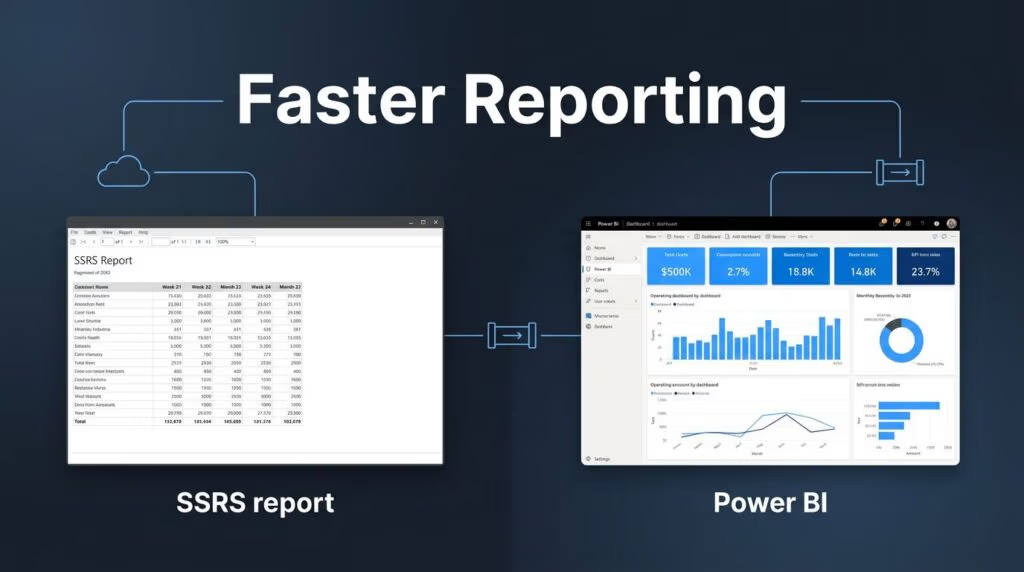
Most teams focused on operational reporting are not choosing between old and new. They are choosing between fixed output and usable insight....
Read Article
Choosing the wrong ingestion method in Microsoft Fabric creates pain fast. You either overbuild for a simple load, or you underbuild and...
Read Article
Slow reports do more than annoy users. They push teams back to Excel, delay decisions, and chip away at trust in your...
Read Article
A single dashboard can become a security risk when ten business units, three regions, and two legal entities all interpret the data...
Read Article
Finance teams quickly lose trust when revenue figures vary between reports. In a Microsoft Fabric semantic model, trust depends on how measures,...
Read Article
Deciding between Azure Synapse and Microsoft Fabric is about more than just picking a tool. The decision impacts how quickly teams can...
Read Article
A disorganized tenant can cover up poor decisions for a long time, only to cause reporting failures with a single bad release....
Read ArticleSpargent's Microsoft Fabric insights support business leaders, data engineers, analysts, and technology teams in building reliable analytics platforms. This blog provides practical guidance on Fabric architecture, OneLake organization, data engineering, Power BI reporting, governance, security, and analytics modernization.
Our articles are designed for teams seeking clearer reporting, improved data quality, and scalable analytics workflows without added complexity. You will find insights for planning new implementations, enhancing data pipelines, organizing workspaces, designing semantic models, and avoiding common mistakes that impact reporting performance.
Use this resource hub to access Microsoft Fabric guides, engineering patterns, governance recommendations, and real-world lessons from analytics projects. Whether your organization is transitioning from legacy BI tools, modernizing Power BI, building lakehouse architecture, or creating repeatable data operations, these insights support better technical and strategic decisions.
For implementation support, visit our Microsoft Fabric Services page. To see analytics modernization in practice, explore our Case Studies. You can also review Microsoft's official Microsoft Fabric overview to compare Spargent's guidance with the platform's native capabilities.