
In This Article
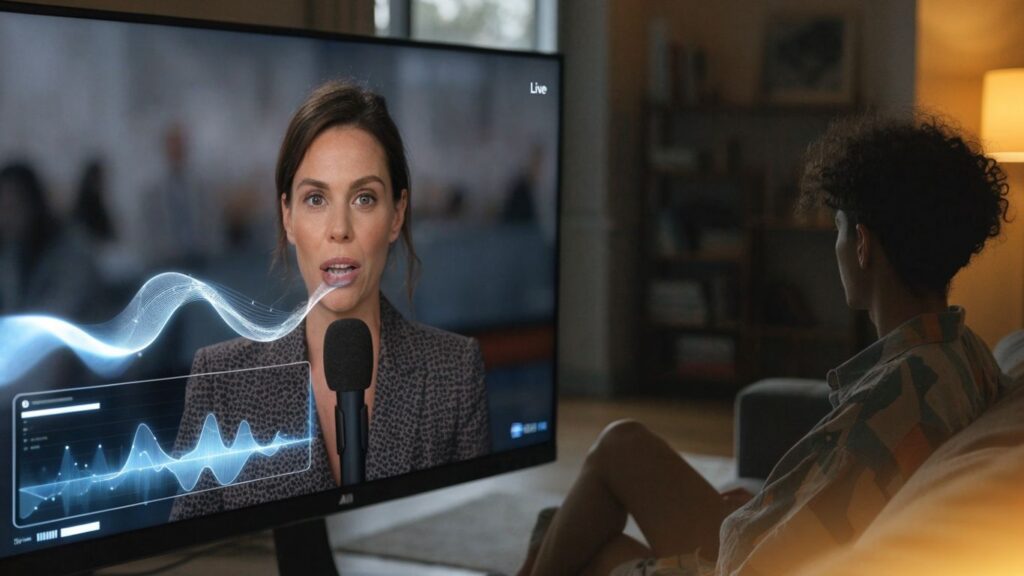
Microsoft has described a proposed AI system that could replace words spoken during a live broadcast and alter a speaker’s lip movements to match. The patent application outlines potential uses from translation to speech cleanup, but it is not evidence of a deployed product. Its most consequential question is how audiences would know what was changed.
Key takeaways
The proposal pairs speech editing with generated video, potentially operating within a delay of seconds. It also describes tailoring changes to individual viewers, which could mean different audiences see different versions of the same event.
- The system is described in a Microsoft patent application, not an announced television product.
- Proposed uses include translation, removing filler words, and replacing selected phrases.
- The application discusses retaining original recordings, but does not guarantee that every implementation would do so.
How the proposed system would work
The application describes AI analyzing audio and video to identify speech selected for removal or replacement. A generative system could produce substitute speech and adjust video frames so the speaker’s lips appear synchronized with the new words. It could also smooth transitions between altered and original footage.
Microsoft outlines near-real-time processing, with a proposed window of roughly one to ten seconds. That is a described operating range, not a verified performance result. The patent names possible settings including television, presentations, lectures, sports and augmented reality.
Translation and editing are among the proposed uses
Some examples focus on clarity: removing filler words, correcting mispronunciations, or reducing visible and audible signs of speech impediments. The system could also translate speech while generating corresponding lip movements in the new language.
Other examples are more editorial. The application describes replacing offensive or audience-inappropriate language, correcting errors, and updating statements with newer information. It also suggests using online sources or subject-specific databases to find replacement words. Those functions raise a key issue: an automated system’s idea of a correction may not reflect a speaker’s intent.
Different viewers could see different versions
The proposal describes using viewer profiles—including language preferences, age, education or location—to personalize modified presentations. As a result, people watching the same event could hear different wording or translations, accompanied by different lip movements.
Personalized subtitles and translated audio already shape how audiences consume media. Altering visible speech adds a distinct challenge: without clear notice, viewers may mistake a generated version for a faithful record of what was said. The application refers to preserving unmodified audio and video as a reference, but does not establish that originals would always be retained or that viewers would receive disclosures.
Trust and governance remain central
The stakes are particularly high in political interviews, government announcements and breaking news, where a short phrase can change how a statement is understood. Broadcasters would need clear policies for deciding what may be altered, labeling modified content and preserving original recordings. The patent itself does not show that Microsoft has built or deployed the system.
For enterprise leaders, the broader lesson is familiar: trustworthy decisions depend on traceable inputs and clear controls. Spargent helps organizations build data platforms and reporting with Microsoft Fabric and Power BI; those tools are not media-authentication systems, but reliable data lineage and governance are likewise essential when people need to know what information has been changed and why.
Sources
- Microsoft’s New AI Could Change What People Say on Live TV, Then Make Their Lips Match, www.techtimes.co.uk.
