
In This Article
Microsoft has expanded its AI Classroom Toolkit with lessons that help students evaluate online information, verify AI-generated claims, and understand risks such as inaccurate answers and privacy exposure. Developed with online safety organization Cyberlite, the classroom-ready resource builds on a program launched in 2023, with localized versions expected to roll out through 2027.
Key takeaways
The expansion shifts the toolkit beyond safe AI use to include media and AI literacy: the judgment needed to assess both AI tools and the information they produce.
- New activities use realistic scenarios to teach verification, critical thinking, and responsible AI use.
- The original toolkit reached educators in 10 countries and 11 languages; 93% of participating South Korean educators reported stronger understanding of AI ethics, privacy, and bias.
- Microsoft plans to release the expanded toolkit in additional languages and localized versions through 2027.
Lessons focus on verification and judgment
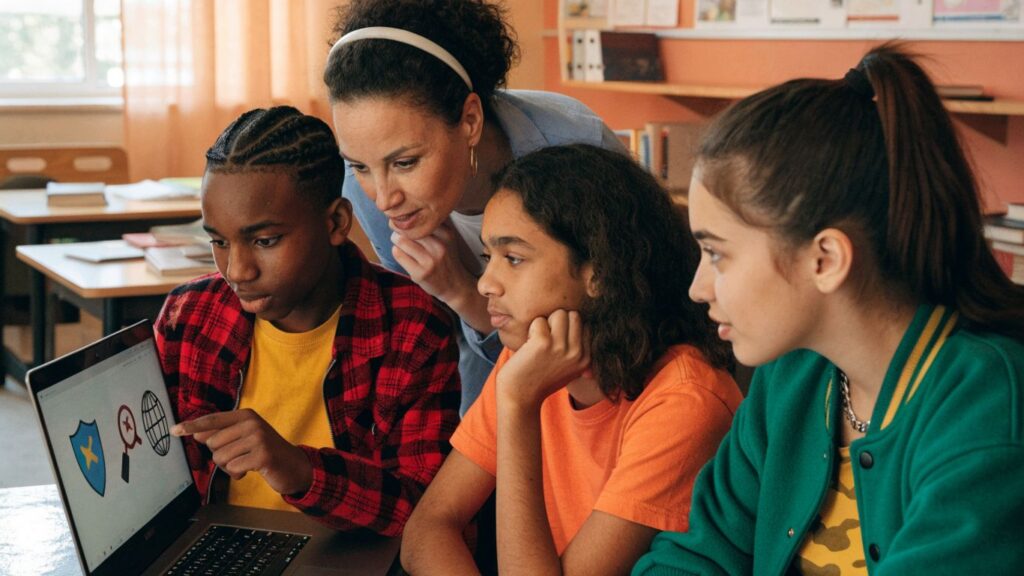
The updated materials ask students to practice evaluating claims rather than treating AI-generated content as automatically trustworthy or untrustworthy. In one exercise, students review a campaign feed containing authentic and AI-created posts, then use lateral reading—checking other sources and the people behind a claim—to assess credibility.
Another scenario follows a student who builds an AI helper for an online game. When the bot invents details and collects players’ personal information, students consider how to check its claims, protect privacy, and take responsibility for content they share. An interactive quiz also prompts students to reflect on their AI habits and potential blind spots. Microsoft says the activities are designed for discussion and practice; students do not need access to an AI tool to take part.
Toolkit builds on earlier reach
Microsoft and Cyberlite first introduced the AI Classroom Toolkit in 2023, when much of the focus was on using AI safely. Cyberlite co-founder Michelle Yao said students’ questions have since become more specific, including how much to trust a chatbot and what to believe online.
The expanded resource will join other Microsoft-supported learning efforts. An AI and Critical Thinking lesson from The Economist Educational Foundation, available through Microsoft Learning Zone, has reached students in 116 countries. Microsoft also points to a wider need for instruction: its 2026 AI in Education report found that 53% of educators and 77% of students surveyed had not received AI training.
Implications for trusted information
Microsoft frames literacy as one part of a broader response that also includes product design and policy. The company says the goal is to help people make informed decisions as AI changes how they find information and participate in public life. The toolkit’s planned localization through 2027 is intended to extend that work to more educators and students.
For enterprise leaders, the underlying challenge is familiar: useful decisions depend on knowing where information came from and whether it can be trusted. In business intelligence, that principle also shapes how organizations govern data and deliver consistent reporting. Spargent helps enterprises build trusted analytics environments with Microsoft Fabric and Power BI, connecting data strategy to clearer, more dependable decisions.
Sources
- Microsoft updates and expands AI Classroom Toolkit -…, Technology Record.
- In an age of AI, deciding what to trust is a foundational skill. Here’s how we’re helping educators teach it., The Official Microsoft Blog.
