
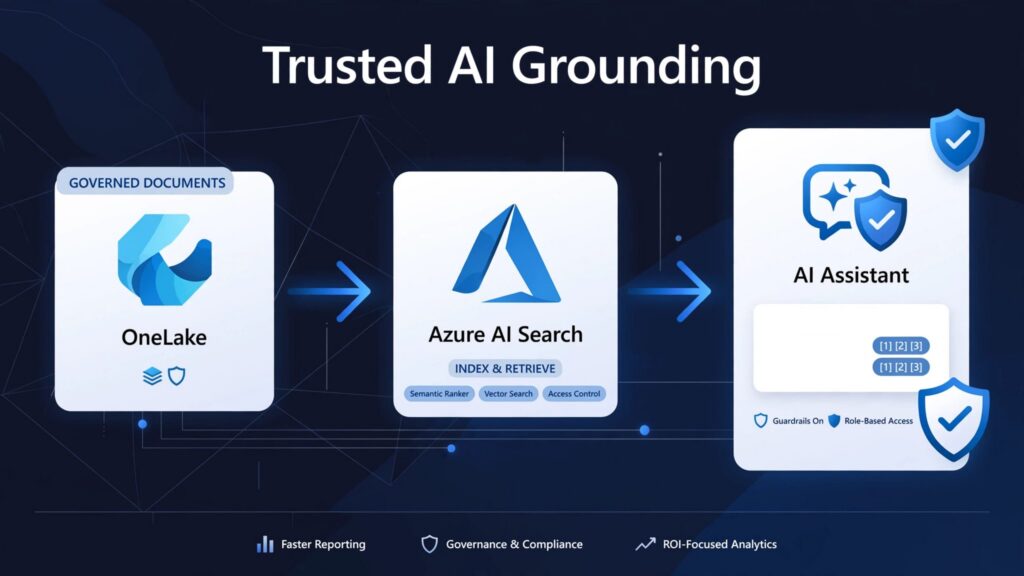
Your enterprise assistant can quote a policy accurately and still expose it to the wrong employee. This approach requires both reliable evidence retrieval and user-specific authorization.
For US companies already using Microsoft Fabric, the practical architecture pairs governed documents and Azure AI Search with retrieval-augmented generation. Tool-augmented grounding lets an assistant cite retrieved evidence and use relevant tools.
Grounding reduces data hallucinations, but it doesn’t eliminate them or replace access controls.
Start by separating document storage, retrieval, and answer generation, because each layer has a different responsibility.
Key Takeaways
- OneLake provides shared document storage, but documents must be extracted and indexed separately before an assistant can retrieve them.
- Grounding requires both reliable evidence retrieval and user-specific authorization. An indexing identity’s access to OneLake does not prove that employees are authorized to see retrieved passages.
- Protect derived content—including extracted text, embeddings, caches, and logs—and ensure retired documents are removed from search results.
- Route policy questions to document retrieval and numerical questions to governed analytical tools, such as Fabric semantic models, using approved access controls.
- Start with a measurable workflow, test citations and authorization across users, and monitor answer quality, freshness, latency, and cost before expanding access.
How OneLake AI Grounding Works for Documents
Microsoft Fabric OneLake is Fabric’s tenant-wide logical data lake, built on Azure Data Lake Storage Gen2. It provides shared storage across Fabric workloads, but storing documents there doesn’t automatically make them searchable by an assistant.
Index the evidence separately
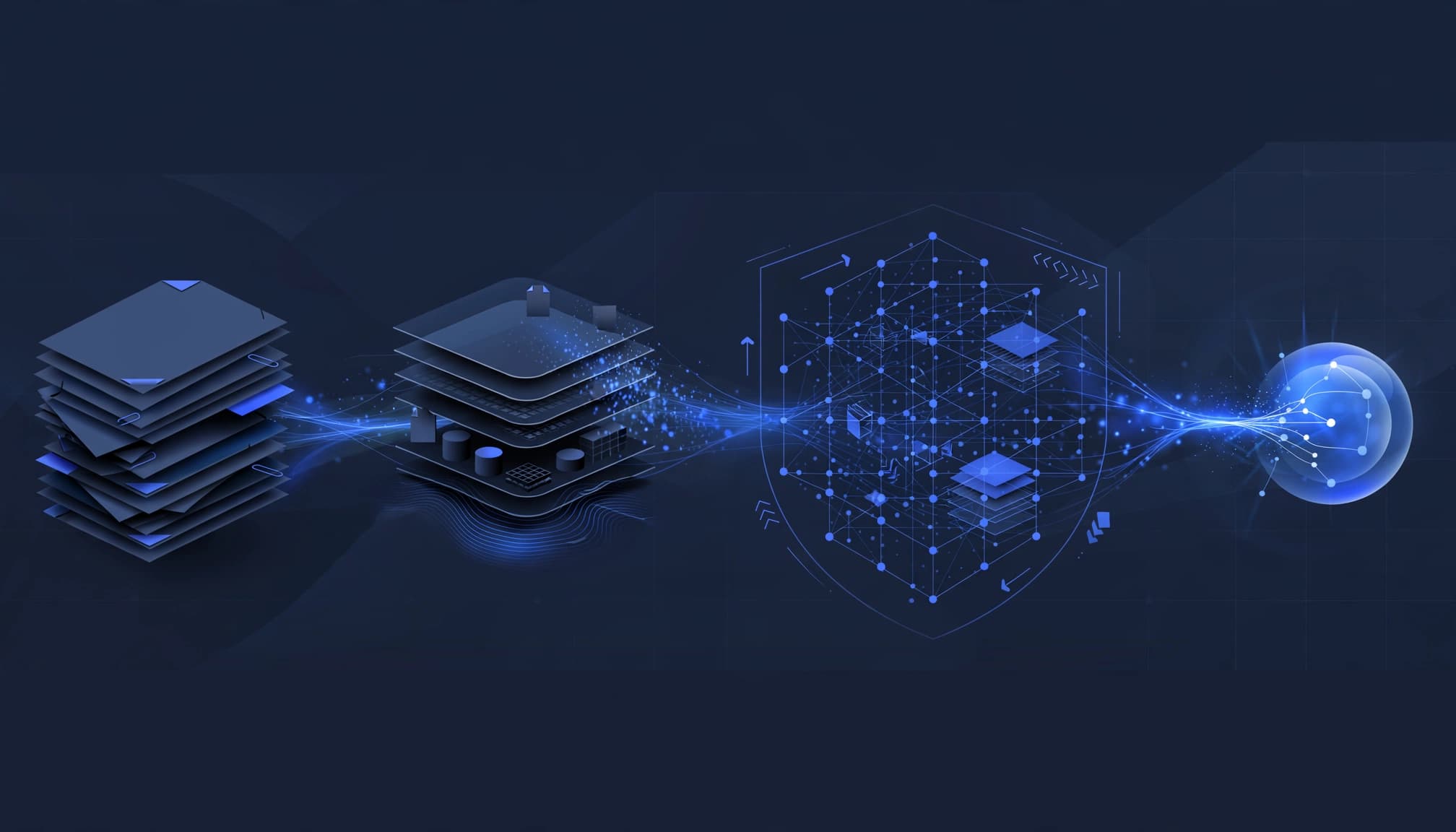
In data lakehouse architectures, a practical approach places documents in the Files area of a Microsoft Fabric Lakehouse. Azure AI Search then extracts content and metadata into a searchable index.
Microsoft’s Azure AI Search OneLake integration provides an indexing path for these files. The documented setup requires the search service and Fabric workspace in the same tenant, managed identity authentication, and appropriate workspace access. These AI grounding techniques keep indexing distinct from retrieval and answer generation.
Check current API versions, connector limitations, and deployment requirements before implementation. The indexer prepares searchable content; your team still builds and secures the assistant.
Retrieve before generating
At question time, the application authenticates the employee, retrieves authorized passages, and supplies them to the language model. Microsoft Foundry can support the custom application layer.
Use retrieval-augmented generation (RAG) with source references, document versions, and clear instructions to abstain when evidence is insufficient. Hybrid retrieval combines keyword matching with vector similarity, which helps with both exact terminology and conversational questions. Tool-augmented grounding lets the assistant call approved tools, rather than relying only on document passages.
The assistant should answer from retrieved passages and attach citations that employees can verify. Model training alone cannot provide current, permission-aware access to changing enterprise documents.
Prepare Documents Before Building the Assistant
Poor extraction makes reliable generation impossible. Scanned PDFs, conflicting policies, and missing ownership create retrieval failures before the model sees a question.
Use a repeatable preparation sequence:
- Identify authoritative collections, assign an owner to each, and define metadata governance for approval, retirement, and access changes.
- Store documents in OneLake or reference supported external storage through shortcuts, then validate compatibility with the selected indexing path.
- Extract text, applying OCR where needed, and split content along meaningful section boundaries.
- Preserve source identifiers, versions, effective dates, page references, classifications, and authorization metadata throughout indexing.
OneLake shortcuts can reference Azure Data Lake Storage, Amazon S3, or Google Cloud Storage without first migrating every source file. Searchable text and embeddings still occupy storage in the retrieval system. For source inventory, a database hub can help identify relevant Fabric databases; it doesn’t perform document extraction, indexing, or access enforcement.
Fabric Data Factory pipelines can orchestrate ingestion and processing dependencies. Dataflows Gen2 fit tabular transformations and document registries, but don’t replace PDF extraction or OCR.
For this foundation, Microsoft Fabric data engineering services should validate extraction quality and data quality. They should also support incremental processing and reconciliation between source files and indexed chunks.
Also define deletion behavior. Removing or retiring a document must remove its searchable content or exclude it from retrieval. Otherwise, the assistant can cite a policy that your business has already withdrawn.
Secure Both OneLake and the Retrieval Layer
A sound governance model combines Microsoft Fabric workspace and item permissions with identity and search-index controls. Add finer controls where supported. Microsoft’s OneLake access control model explains the role-based foundation.
Separate indexing access from employee access
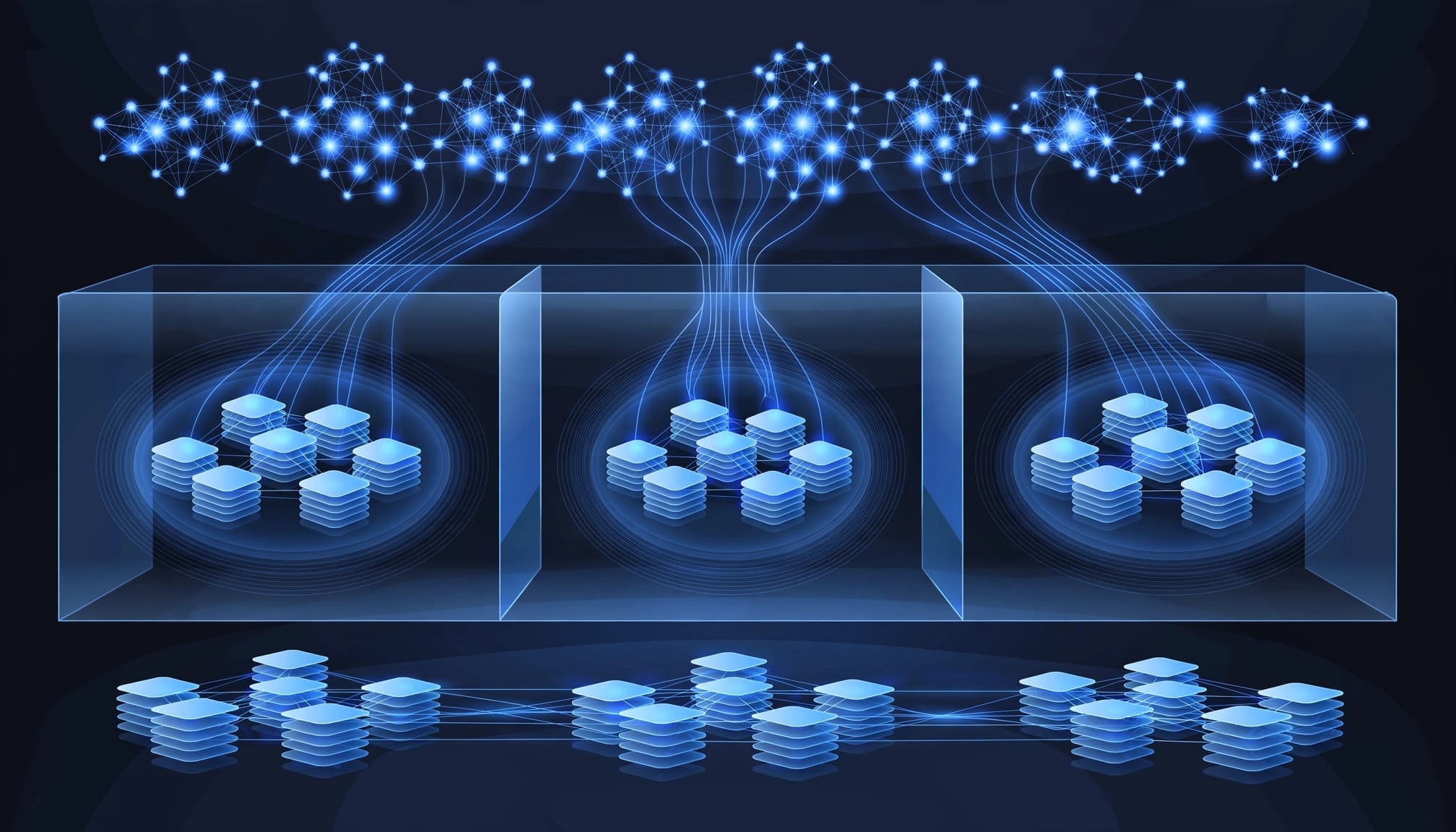
The indexing identity may read more documents than any individual employee. Therefore, its successful connection to OneLake proves ingestion access, not end-user authorization.
Authenticate employees with Microsoft Entra ID. Then enforce document access before retrieved passages enter the model’s context. Validate user and group membership against an authoritative permission source.
Row-level security governs structured records. However, row-level security alone doesn’t secure document passages in an external search index. Document retrieval also needs file-level authorization. Maintain access metadata in the index or use another verified authorization mechanism. Never depend on a prompt asking the assistant to conceal restricted information.
Protect derived content and logs
Treat extracted text, embeddings, caches, and conversation logs as governed assets. Sensitive information can leave OneLake through these derivatives even when the original file remains protected.
Microsoft Purview sensitivity labels and data loss prevention policies help govern supported Fabric experiences. Validate their coverage for external search indexes and assistant telemetry rather than assuming automatic propagation.
OneLake permissions don’t automatically become search-result permissions when content is copied into an external index.
The operational governance model should define how to protect derived content, manage retention, assign audit ownership, and revoke access. A sound OneLake data governance strategy supports those procedures. Re-test those controls whenever identities, connectors, or retrieval logic change.
Connect Document Answers to Governed Analytics
Employees often combine questions about business rules with questions about current results. Document RAG can explain a policy, while governed analytical queries calculate related metrics. Tool-augmented grounding brings both into one assistant experience, supporting an enterprise data unified vision across governed documents and measures.
Route numerical questions through semantic models
Use Fabric semantic models for approved measures, relationships, and business definitions. These semantic models provide structured data grounding for trusted metric queries. A Microsoft Fabric Warehouse can supply curated relational data, while a Lakehouse supports lake-based engineering and analytics.
Avoid calculating financial totals from retrieved prose when an authoritative measure exists in semantic models. Instead, route the question through a controlled analytical tool and approved semantic models, preserving the query, result, and data lineage.
Microsoft Fabric semantic model design helps keep the assistant aligned with Power BI reporting and definitions in semantic models. This Microsoft Fabric Power BI integration reduces conflicting KPI definitions and spreadsheet reconciliation.
Add ontology where relationships matter
Fabric IQ’s ontology capability, documented as preview, provides a semantic ontology layer that connects business concepts, properties, relationships, and metrics to enterprise data. Knowledge graphs can also represent these business relationships.
An ontology can give agents context about customers, equipment, or operational dependencies. A database hub can help discover relevant Fabric databases, but neither it nor an ontology replaces document extraction, authorization, or data-quality checks.
Choose analytical access modes according to freshness and workload needs. Import mode favors in-memory performance; DirectQuery queries the source; Direct Lake accesses OneLake-backed data. None guarantees instant freshness under every configuration.
Fabric Real-Time Intelligence can supply event-driven context when operational questions require recent telemetry. Keep those tool results distinguishable from document evidence in the final answer.
Test Grounding Before Expanding Access
Begin with one owned document collection and one measurable workflow. Policy lookup or operations guidance is easier to validate than an assistant spanning the entire enterprise.
Build an evaluation set from real questions supplied by employees. Include outdated terminology, conflicting documents, missing evidence, and questions from users with different access rights.
Track these measures:
- Retrieval recall measures whether the search layer finds the authoritative passage.
- Citation correctness checks whether each cited passage supports the associated claim.
- Answer faithfulness checks whether responses add unsupported statements or calculations, including in tool-augmented grounding.
- Authorization tests detect restricted content in answers, citations, and logs.
For structured analytical questions, use text-to-sql benchmarks as a separate evaluation input. They don’t replace document retrieval or authorization tests. Inventory structured sources in a database hub before using them in these tests.
Also monitor abstention quality. An assistant that declines every difficult question may avoid unsupported claims while providing little business value.
For semantic drift, compare document versions, business glossaries, indexed metadata, and semantic-model definitions. Test whether the semantic ontology layer represents business relationships correctly. Re-run evaluations after policy updates, schema changes, or measure revisions.
Documents are untrusted input. Test passages that instruct autonomous AI agents to ignore security rules or call unauthorized tools. Keep tool permissions independent of retrieved text.
A governed Model Context Protocol interface can expose approved tools. It doesn’t grant permissions or replace application-level authorization. Require approval for consequential actions.
Plan Capacity, Latency, and Operating Cost
OneLake AI grounding spans several cost centers. Fabric capacity, Azure AI Search, OCR, embeddings, and model inference need separate monitoring.
The main trade-offs depend on how information reaches the assistant.
| Pattern | Main advantage | Cost or latency concern |
|---|---|---|
| Indexed document RAG | Fast retrieval after processing | Index storage, extraction, embeddings, freshness lag |
| OneLake shortcuts | Avoid an initial source-data migration | External reads and possible cross-cloud charges |
| Governed analytical queries | Access current business measures, subject to source and refresh configuration | Query execution time and source capacity |
Shortcuts avoid copying the original dataset into OneLake, but they don’t remove search-index storage or processing costs. A direct-query pattern can query source data, but latency and source capacity still affect response times. Freshness depends on the source and configuration, so direct queries don’t guarantee real-time results.
Measure indexing duration, freshness lag, retrieval latency, and end-to-end p95 response time separately. This shows whether the bottleneck sits in ingestion, search, analytical tools, or generation.
Microsoft Fabric capacity planning should include overlapping pipelines, notebooks, semantic-model refreshes, and user queries. Use capacity metrics to identify contention before increasing capacity.
For Microsoft Fabric performance optimization, remove duplicate processing and unnecessary re-indexing first. Optimizing Power BI semantic models can also speed governed analytical tool calls. Report cost per successfully resolved request alongside infrastructure spend so lower cost doesn’t hide declining answer quality.
Customer Success: Eton Solutions Cuts Document Processing Time
Eton Solutions, a wealth management technology company, faced document workflows requiring 10 to 15 manual steps, according to Microsoft’s Eton Solutions customer story. Using Microsoft Fabric, Azure AI Search, Azure OpenAI, and Azure Document Intelligence, the company cut processing time from eight minutes to two, a 75% efficiency gain, and reduced workflows to two steps.
The story supports the value of combining document processing, analytics, and AI, but doesn’t establish that Eton used the OneLake files indexer or this blueprint’s permission design. For enterprise leaders, the lesson is to measure workflow outcomes, such as fewer manual steps and shorter processing times, rather than judging success by fluent answers alone.
Deliver With Senior Fabric Expertise, Without a Full Hiring Cycle
Spargent Analytics is a specialist Microsoft Fabric implementation partner for US mid-market and enterprise organizations. Its Microsoft Fabric consultants support internal analytics teams or provide delivery capacity where no dedicated team exists.
Delivery is built around US business needs, with senior Microsoft Fabric specialists from Europe. Clear communication and an efficient staffing model can improve project ROI compared with traditional US-only consulting, without requiring a full internal hiring cycle.
Spargent’s Microsoft Fabric consulting services span ingestion, Data Factory, Dataflows Gen2, Lakehouse and Warehouse engineering, OneLake consulting, semantic models, governance, real-time analytics, and managed support.
For organizations planning a Microsoft Fabric migration, document grounding should follow platform readiness rather than become a separate AI experiment. A Power BI-to-Microsoft Fabric migration also needs model ownership, refresh dependencies, and security reviewed.
This data platform modernization approach connects AI readiness with faster reporting, fewer manual Excel workflows, and better use of existing Microsoft investments. After go-live, Microsoft Fabric managed services can maintain pipelines, monitor capacity, and keep retrieval aligned with changing business content.
Frequently Asked Questions
Does storing documents in OneLake make them searchable by an assistant?
No. Documents need to be extracted and indexed through a supported retrieval path, such as Azure AI Search, before an assistant can search them.
Do OneLake permissions automatically secure search results?
No. When content is copied into an external search index, OneLake permissions do not automatically become search-result permissions. Enforce and test document-level authorization before retrieved passages reach the model.
Should an assistant use document retrieval to answer numerical questions?
Use governed analytical tools and approved Fabric semantic models for authoritative measures and calculations. Document retrieval can provide policy context, but retrieved prose should not replace approved metrics.
How should teams validate a grounded assistant before expanding access?
Test real employee questions, including conflicting or outdated documents, missing evidence, and users with different access rights. Measure retrieval recall, citation correctness, answer faithfulness, authorization, freshness, latency, and cost.
Build a Grounded Assistant You Can Operate
Reliable tool-augmented grounding depends on authorized, current evidence and a tested retrieval path. Start with one workflow, validate its citations, tool results, and access controls, then expand based on measured results.
To assess your architecture, governance gaps, and implementation priorities, Book a Microsoft Fabric Discovery Call.
A useful assistant earns trust through verifiable answers and controlled access, not confident wording.
