
In This Article
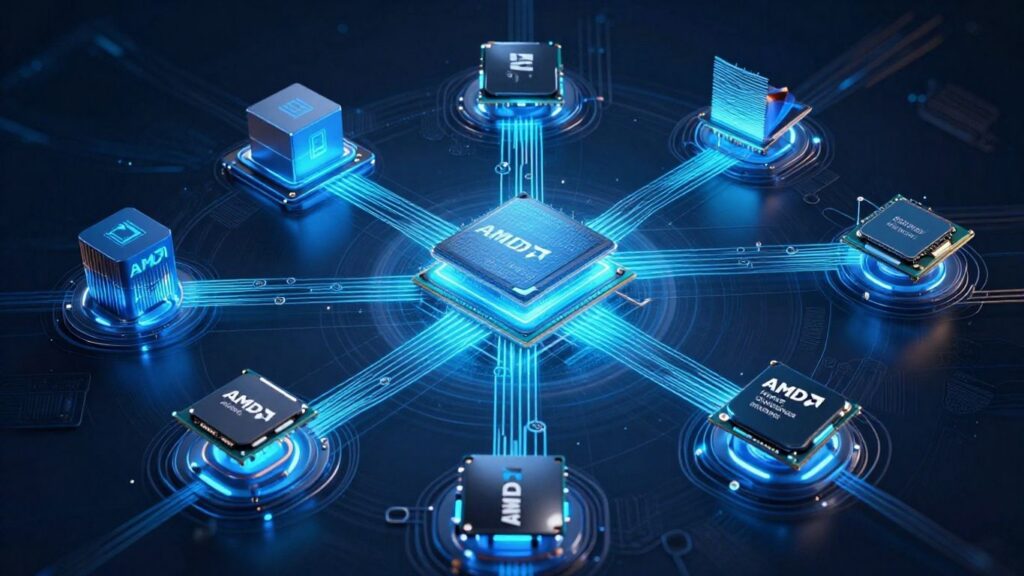
Microsoft has announced a significant expansion of its Azure cloud infrastructure, integrating AMD’s latest high-performance computing solutions.
By deploying the Helios rack-scale platform and 6th Gen EPYC processors, Microsoft aims to provide enterprise customers with the scalable, high-density compute power necessary to drive complex AI inference and data-intensive workloads efficiently.
Key takeaways
- Deployment of AMD Helios AI systems to support production-scale reasoning and agentic inference.
- Introduction of HDv2 virtual machines designed for high-density data processing and AI agent coordination.
- Launch of HXv2 virtual machines, optimized for electronic design automation and scientific simulations.
- Enhanced performance capabilities featuring 6th Gen AMD EPYC processors and 800 Gb InfiniBand connectivity.
Scaling AI and data infrastructure
As enterprises continue to integrate generative AI into their core operations, the demand for underlying compute power has surged. For organizations utilizing Microsoft Fabric to unify their data estate, these infrastructure advancements provide a more robust foundation for large-scale analytics. By leveraging the AMD Helios rack-scale platform, Microsoft enables its customers to run high-performance inference workloads more efficiently.
At Spargent, we recognize that the ability to process data at scale is critical to achieving a rapid return on investment, and these hardware improvements significantly reduce the bottlenecks that often impede complex data pipelines.
Purpose-built virtual machines for demanding workloads
Microsoft’s new Azure offerings are tailored to specific technical requirements, ensuring that compute resources are aligned with business needs. The new virtual machine series include:
| VM Series | Primary Use Case | Key Features |
|---|---|---|
| HDv2 | Data preparation and AI agents | 500 EPYC cores, 4TB RAM, 400 Gb networking |
| HXv2 | Silicon design and scientific computing | 176 EPYC cores, 5GHz clock speed, 800 Gb InfiniBand |
| ND MI455X v7 | Large-scale AI inference | AMD Helios rack-scale architecture |
These configurations allow IT leaders to optimize their cloud spend by selecting infrastructure that matches the specific demands of their analytical and engineering tasks. Whether it is accelerating electronic design automation or managing massive reinforcement learning datasets, these VMs provide the necessary throughput to maintain competitive advantage.
Driving measurable business outcomes
For enterprise leadership, the shift toward more specialized, heterogeneous cloud infrastructure is about more than just raw performance; it is about enabling faster time-to-insight. By offloading networking and security functions to dedicated hardware like Pensando DPUs and leveraging the latest EPYC processors, Microsoft is reducing the operational overhead for Azure users.
Our focus at Spargent remains on helping clients navigate these infrastructure shifts to maximize the performance of their Microsoft Fabric and Power BI environments. By aligning high-performance compute with a sound data strategy, organizations can effectively eliminate reporting bottlenecks and drive measurable revenue growth through more reliable, data-driven decision-making.
Sources
- Microsoft expands Azure AI and HPC infrastructure with AMD, The Official Microsoft Blog.
- Microsoft to deploy AMD Helios AI systems on Azure, Tech Wire Asia.
