
In This Article
Microsoft has withdrawn from a deal to lease computing capacity at a planned AI data center in Loughton, Essex, after the site faced a power-grid delay stretching into the 2030s. The company says the decision affects one location, not its wider UK investment commitment or its relationship with infrastructure partner Nscale.
Key takeaways
- Microsoft exited the Loughton site agreement, which had been linked to plans for roughly 23,000 Nvidia chips.
- Nscale says it is still pursuing the project and exploring alternative power sources and other UK locations.
- Microsoft’s UK leader says the company’s $30 billion investment plan for 2025–2028 remains unchanged.
The withdrawal underscores how access to electricity and grid connections can determine whether data center plans become operational capacity. For businesses, the broader lesson is that AI infrastructure investment alone does not guarantee usable computing resources or business value.
Power constraints reshape the Essex project
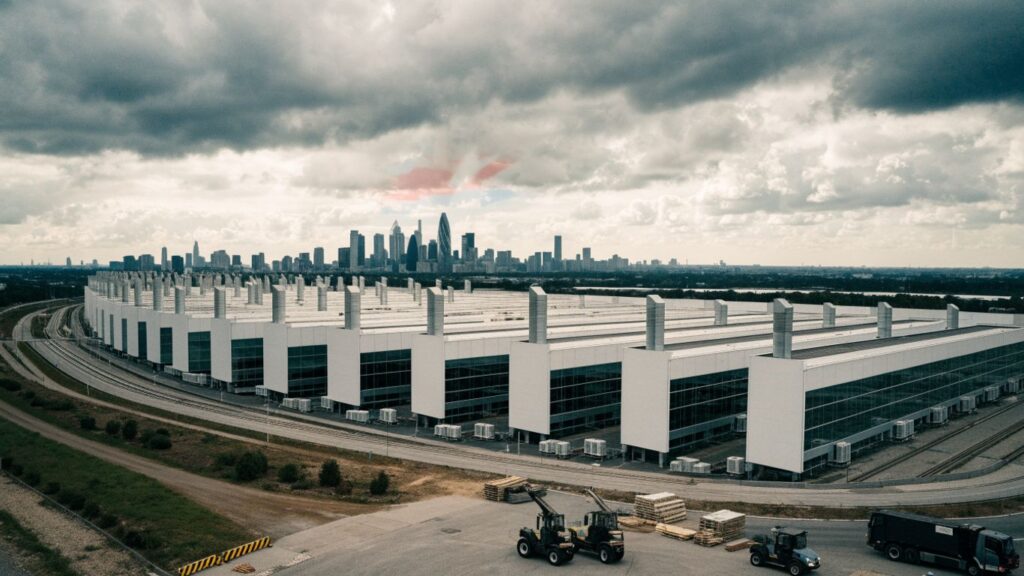
Microsoft had agreed to lease capacity at Nscale’s proposed Loughton facility, described by former Prime Minister Keir Starmer as the UK’s largest sovereign AI data center. Reports said the site could not receive power from the grid until after 2030. Microsoft confirmed its exit, while emphasizing that the decision concerns a single site.
Nscale said it remains committed to Loughton and is considering alternative power options, alongside other expansion sites in the UK. The company also said the change does not affect its other contracts with Microsoft. The Essex agreement represented only a portion of the companies’ broader arrangements, according to a person familiar with the matter.
Microsoft maintains its UK investment pledge
Microsoft announced a $30 billion UK investment plan covering 2025 to 2028, including spending on AI infrastructure. Darren Hardman, Microsoft’s UK and Ireland chief executive, told the Press Association that the plan would not change and that the Loughton project was a small component of the overall commitment. He also described the company’s relationship with Nscale as continuing, including work on sites beyond the UK.
The company also reported that generative AI use in Britain reached 43.7% in the second quarter of 2026, up from 36.6% a year earlier. That adoption growth is increasing demand for computing, but projects still depend on power, cost, delivery timelines, and a clear business case.
What enterprise leaders should watch
The changing project highlights the importance of matching infrastructure plans to practical constraints and measurable returns. For enterprise teams, making effective use of available AI and cloud capacity also depends on well-integrated data and timely reporting. Spargent helps organizations build Microsoft Fabric and Power BI data platforms, with certified experts supporting ETL and analytics delivery; its stated average ROI payback period is six months. For decision-makers, the key measure is not simply how much infrastructure is announced, but whether it enables faster, more reliable business outcomes.
- Microsoft exits data centre deal in blow to UK AI ambitions, Digital Journal.
- Microsoft Cancels Nscale Essex Data Center Deal, Scraps Plans for 23,000 Nvidia Chips, Tekedia.
- Microsoft committed to US$30bil UK investment despite data centre exit, KLSE Screener.
- Microsoft still committed to £22bn UK investment despite data centre withdrawal, Belfast Telegraph.
