

An end-to-end analytics pipeline covers the entire data journey, from raw source systems to reliable reports. For small and mid-sized companies, this process is often disorganized, involving manual exports, Excel adjustments, SQL scripts, and outdated dashboards.
This approach is manageable until issues arise: conflicting numbers, slow refreshes, and each new data source requiring custom work.
A modern platform like Microsoft Fabric unifies ingestion, storage, transformation, analytics, BI, and AI, enabling faster decisions, fewer data copies, and a streamlined path to AI-ready reporting.
What an end-to-end analytics pipeline actually does
From raw data to trusted insight
A robust pipeline does more than transfer data. It gathers information from ERP, CRM, finance tools, ecommerce platforms, files, and streams, then validates, cleans, enriches, stores, models, and publishes it for user access.
This final step is critical. If the pipeline ends at ETL, analysts must complete tasks manually. A true end-to-end solution includes shared storage, semantic modeling, dashboards, governance, and monitoring. It ensures managers and analysts access consistent data, and AI tools receive current, governed information.
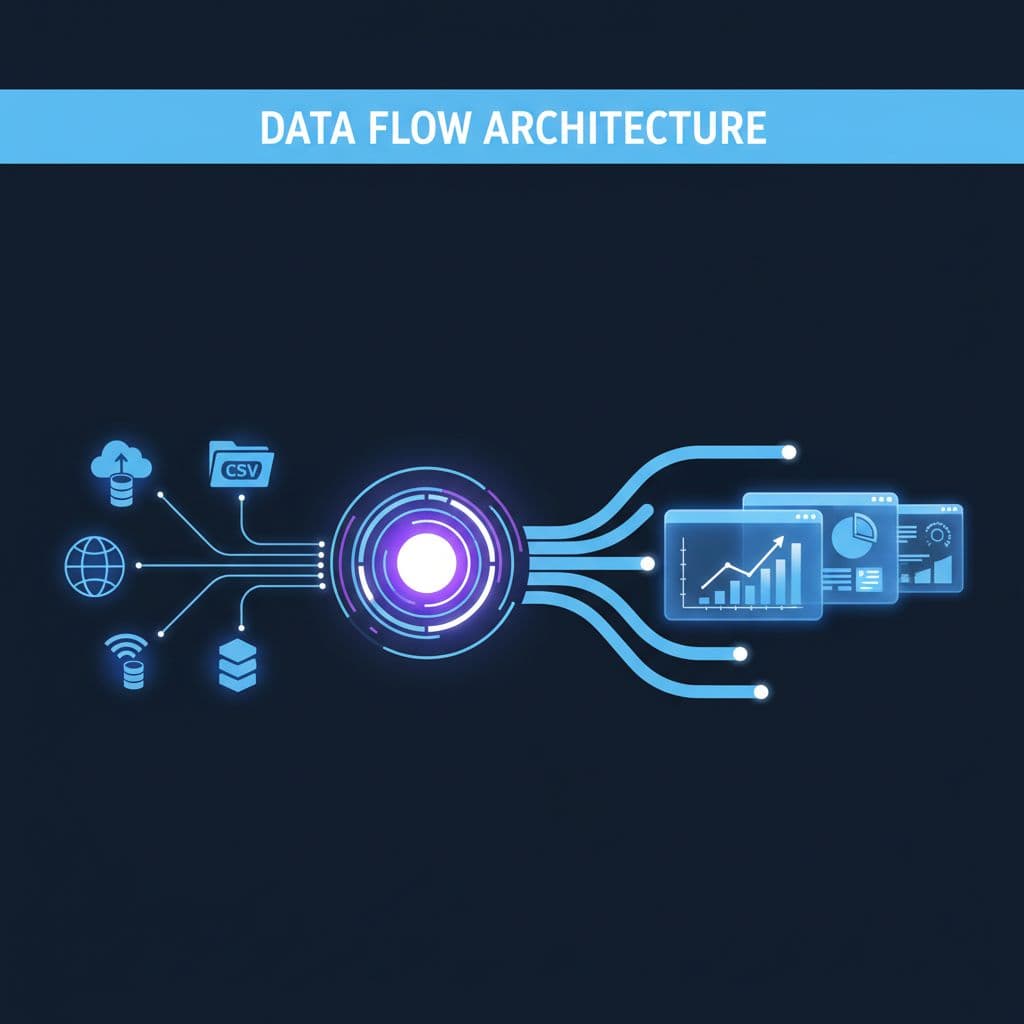
A good pipeline does more than move data. It collects data from systems like ERP, CRM, finance tools, ecommerce platforms, files, and streams. Then it validates, cleans, enriches, stores, models, and publishes that data so people can use it.
The process is straightforward: ingest, refine, store, model, analyze, and act. The challenge lies in maintaining data consistency throughout. Effective pipelines minimize duplication and maintain a single governed foundation that supports SQL, Spark, dashboards, and natural-language access.
Why broken pipelines slow down growth
When the pipeline is inadequate, business teams are impacted first. Reports are delayed, KPIs vary by spreadsheet author, engineers focus on fixing unstable scripts rather than platform improvements, and security teams lose confidence due to unclear data movement.
If a KPI changes with each spreadsheet refresh, your pipeline is not serving as the source of truth.
At this stage, growth becomes costly. Expanding regions, tools, and channels increases data duplication, infrastructure needs, maintenance, and risk exposure. Fragmented or outdated data also complicates AI, leading to confusion rather than insight.
How Microsoft Fabric supports the whole pipeline in one place
Microsoft Fabric is an end-to-end analytics SaaS platform that integrates data integration, engineering, warehousing, real-time analytics, data science, Power BI, and AI on a unified foundation.
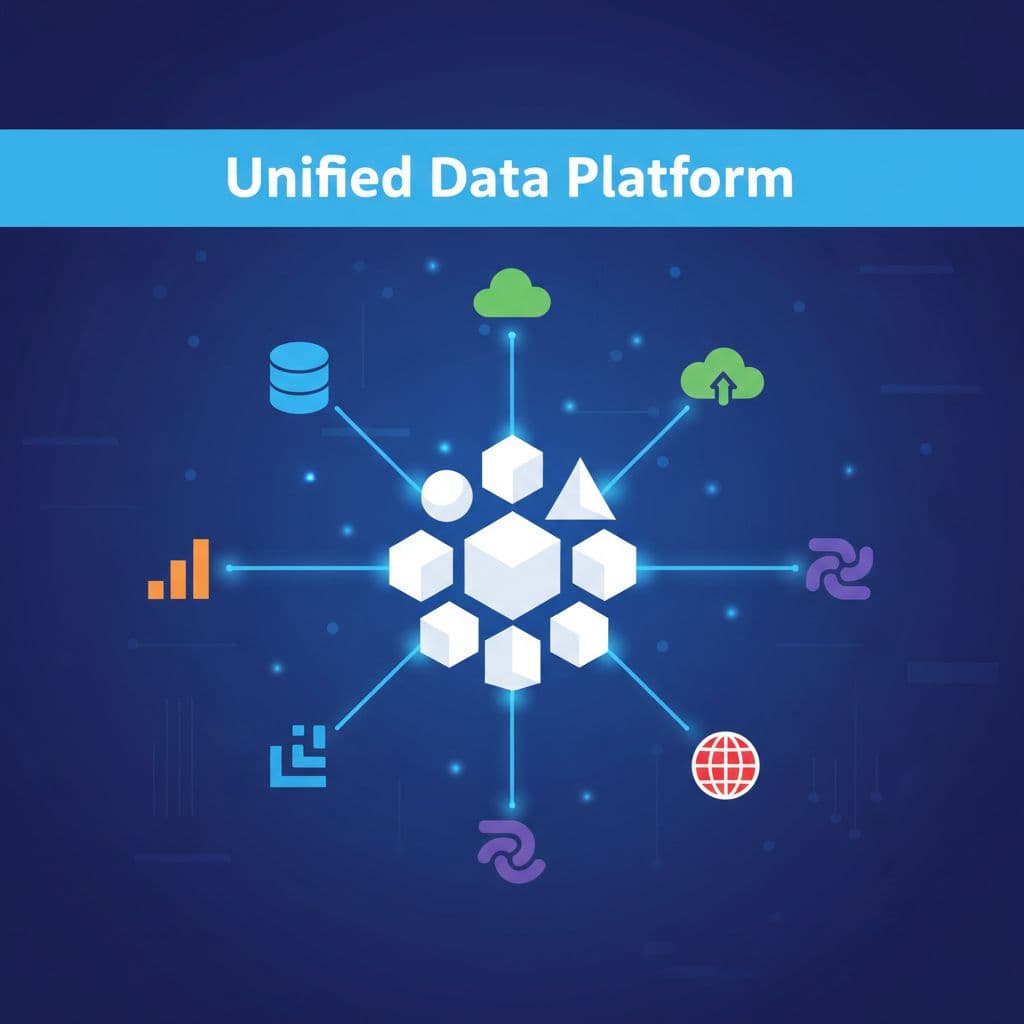
Use OneLake to reduce copies and simplify access
OneLake serves as Fabric’s shared storage layer, automatically created for each tenant and storing data in open Delta Parquet format. This allows a single data copy to support multiple engines. Datasets can be ingested, refined, queried, and visualized across tools without moving between products.
Fabric also simplifies migration. Shortcuts enable referencing data in Azure Data Lake Storage, Amazon S3, or other Fabric workspaces without duplication. Mirroring keeps operational data current from supported databases without extensive ETL, reducing custom code and one-off pipelines for SMB teams.
Blend batch, streaming, and BI workflows without switching tools
Most companies require more than batch data; they need scheduled loads, near real-time events, ad hoc analysis, and executive reporting. Fabric supports all these needs within a unified environment using data pipelines, eventstreams, Spark notebooks, SQL warehouses, KQL-based real-time analysis, and Power BI.
This approach reduces tool sprawl. Smaller teams prefer a single platform for building, monitoring, and improving pipelines, rather than managing multiple systems. Customer examples highlight the benefits: Iceland Foods used Fabric and Real-Time Intelligence for near real-time reporting and reduced data movement, while AP Pension improved compliance by anonymizing sensitive data during ingestion without hindering business users.
What a practical pipeline design looks like for SMB teams
For US companies with 50 to 500 employees, the objective is practical value, not unnecessary complexity. A repeatable, maintainable, and governable pattern is essential for scalable growth.
Start with repeatable ingestion and standard data layers
New sources will keep showing up. If every source needs a custom Python script and hand-built logic, your team will fall behind. A better pattern uses standard ingestion methods, validation rules, naming conventions, and medallion-style layers.
In practice, that often means a raw layer for landing source data, a refined layer for cleaning and business logic, and a curated layer for reporting-ready datasets. Fabric supports this well through Data Factory, Lakehouse, Warehouse, and notebooks. Reusable ingestion, shortcuts, and mirroring can reduce engineering effort and help new systems onboard faster.
Build for reporting, self-service, and AI from the beginning
A pipeline should balance governance and usability. The same foundation must support executive dashboards, analyst exploration, and natural-language queries. Semantic models are essential because they define trusted business logic, ensuring that terms like “net sales” and “gross margin” remain consistent across reports.
This approach also benefits AI. Fabric Data Agents and Copilot leverage governed data and semantic context, resulting in more relevant responses. NTT DATA describes Fabric data agents as a conversational layer over enterprise data. For SMB teams, this reduces ad hoc report requests and allows more focus on impactful analysis.
Add governance early so trust does not break later
Governance should be integrated into the pipeline, not treated as a later cleanup phase. Incorporate metadata, lineage, endorsements, access control, and data scanning into standard workflows.
Fabric’s integration with Microsoft Purview supports these needs. Teams can scan sources, review lineage, label sensitive data, and control sharing. This is especially important for regulated industries such as finance and healthcare, but benefits all users by increasing trust and reducing shadow reporting.
How to tell if your pipeline is ready for AI and growth
A healthy pipeline operates reliably: data arrives on time, definitions remain stable, reports refresh smoothly, and teams access trusted data without manual exchanges.
Signs your pipeline is holding you back
If any of these issues are present, your current stack is more costly than it appears:
-
- Dashboards lag hours or days behind the business.
-
- The same KPI has multiple definitions across teams.
-
- Analysts still spend too much time in Excel cleaning files.
-
- New sources require custom code every time.
-
- Leadership does not trust the dashboard without a manual cross-check.
-
- Sensitive data is shared too broadly, or lineage is unclear.
These challenges indicate a fragmented pipeline, insufficient governance, or overreliance on manual interventions.
Questions to ask before you redesign the stack
Begin with a brief assessment:
- Where is your data stored, in cloud applications, on-premises databases, files, or streams?
- How current must your data be?
- Which reports cause the most confusion?
- What data requires stricter access control?
- Is real-time visibility necessary, or is hourly sufficient?
- Are you preparing for AI assistants, and do they have a single trusted data source?
Your responses will form the roadmap. For assistance, Book a free 30-minute Microsoft Fabric discovery call. Spargent is the only consultancy exclusively focused on Microsoft Fabric, with DP-600 and DP-700 certified engineers in data engineering, warehousing, real-time analytics, data science, and Power BI.
Customer Use Cases: Positive ROI from Microsoft Fabric and data-driven transformation
Spargent Analytics enables SMBs, mid-market, and enterprise teams to convert disconnected data into measurable business value using Microsoft Fabric, Power BI, Data Factory, OneLake, Lakehouse, and Warehouse architecture, semantic models, governance, and real-time analytics.
The focus is on ROI rather than platform sprawl. Designed for US companies and delivered from Europe, this model provides access to senior Fabric experts at a more efficient cost.
ROI-focused implementations typically deliver faster reporting, improved executive visibility, greater trust in KPIs, and increased self-service adoption. In suitable cases, teams achieve decision cycles three times faster, self-service analytics adoption near 85%, and ROI payback within six months. As an external benchmark, Microsoft’s commissioned Forrester Total Economic Impact study reported 379% ROI and $9.79M NPV for a composite Fabric organization
Use case 1: Multi-entity finance reporting
Prior to working with Spargent, a US services company relied on emailed spreadsheets and manual reconciliations across ERP, payroll, and CRM exports. Leadership had limited visibility, and monthly reporting required several days.
Spargent’s team of data engineers implemented Fabric pipelines, a governed Lakehouse and Warehouse architecture, and Power BI executive dashboards using certified semantic models. This led to measurable improvements in reporting speed, reduced manual processes, and increased trust in board-level metrics.
Use case 2: Distribution and operations visibility
A distributor managed data across separate inventory, order, returns, and purchasing systems. Data refreshes were slow, custom ETL processes were fragile, and operations leaders lacked timely visibility to address issues.
Spargent team rebuilt the pipeline in Fabric with repeatable ingestion, medallion-style layers, and self-service reporting in Power BI. This reduced manual maintenance, accelerated time-to-value, and provided leadership with a single governed view of sales, stock, and returns.
Use case 3: Compliance-sensitive analytics
A regulated organization required improved dashboards but could not compromise on data controls. Data ownership was unclear, lineage was weak, and teams were concerned about broader access.
Spargent team integrated governance into the platform through metadata, lineage, access controls, and trusted semantic models. This improved data availability while maintaining control and established a clearer path to AI-ready analytics.
To identify the highest-ROI use cases in your environment, request a Microsoft Fabric or data maturity assessment, or Contact us for any Microsoft Fabric needs.
Conclusion
A robust analytics pipeline should simplify data usage, governance, and action. If your process still relies on exports, manual corrections, and duplicate metrics, it is hindering business performance.
Fabric offers SMB teams a practical solution to unify ingestion, storage, transformation, reporting, and AI on a single foundation. This reduces duplication, ensures fresher data, and provides a more reliable path to trusted reporting. If your current setup is showing signs of strain, now is the time to address the pipeline rather than apply temporary fixes.
