

Choosing a data platform looks simple until licensing, staffing, and governance enter the room. For a mid-sized team, Microsoft Fabric vs Databricks is less about raw features and more about what your people can run well every week.
That usually narrows the choice fast. If you need business reporting, self-service analytics, and a shorter path to value, one platform tends to fit better. If your roadmap leans toward custom engineering, data science, and heavier AI work, the other starts to pull ahead.
Where the two platforms feel different in daily work
Both products cover the basics well. In 2026, each supports lakehouse workloads, Spark, notebooks, SQL, pipelines, and AI-related use cases. The bigger difference is operating model.
Fabric is an all-in-one SaaS experience with OneLake and Power BI built in. Databricks is still more engineering-led, even though it has become easier to manage. That split matters when your team has five analysts and one engineer, not the other way around.
This quick table focuses on what usually changes the buying decision for mid-market teams.
| Area | Microsoft Fabric | Databricks | What it means for mid-sized teams |
|---|---|---|---|
| Core design | Unified analytics suite | Engineering-first lakehouse platform | Fabric reduces tool switching |
| BI experience | Native Power BI, Direct Lake | Usually paired with external BI | Fabric helps self-service faster |
| Pricing model | Capacity-based | Usage-based DBUs plus cloud costs | Fabric is easier to forecast for steady use |
| Setup overhead | Lower SaaS overhead | More compute and platform tuning | Databricks needs more admin discipline |
| Low-code support | Strong, especially Dataflow Gen2 | Limited, code-first | Fabric suits mixed-skill teams |
| Governance | Improving fast | More mature with Unity Catalog | Databricks leads for fine-grained control |
| ML and AI | Solid, improving, Microsoft-first | Stronger native ML tooling | Databricks fits technical AI programs |
| Scalability | Strong for most analytics programs | Excellent for heavy engineering growth | Databricks has more headroom at the top end |
The short version is simple. Fabric is easier to adopt when analytics is business-led. Databricks is stronger when data engineering leads the roadmap and the team can handle more platform work.
Licensing, setup speed, and governance shape the first 90 days
Licensing is where many mid-sized teams lose time. Fabric pricing is easier to explain than it is to size. You buy capacity, then match workspaces, users, and sharing rules to that capacity. Microsoft’s own Fabric licensing guidance and Microsoft Fabric pricing page are worth reviewing before you assume the first SKU is enough.
Databricks gives you more elastic cost control, because you pay for usage. That can work well for bursty engineering jobs. Still, monthly spend can drift if compute policies are loose or workloads expand faster than expected.

Time to value often favors Fabric. Teams already using Microsoft 365, Azure, Entra ID, and Power BI can move from raw data to dashboards in one to two weeks for a focused use case. Databricks usually takes longer, often two to four weeks, because notebooks, jobs, repos, and compute controls need more engineering setup.
The costly platform is usually the one your team can’t operate well after month three.
What is mature today, and what is still moving
Broadly available capabilities are clear on both sides. Fabric’s lakehouse, pipelines, Spark, OneLake, and Direct Lake reporting are established. Databricks has a mature core with Delta Lake, notebooks, MLflow, and Unity Catalog.
Some parts are still moving. Fabric governance keeps improving through Purview integration and OneSecurity, but a few governance patterns still need careful tenant testing. Databricks AI features also move quickly, yet its governance model is more settled today.
When Fabric is the better choice, and when Databricks is worth the extra lift
Fabric is the better fit when reporting is the main business outcome. Picture a 700-person company with three analysts, one analytics engineer, and heavy Power BI use. They need finance, sales, and operations dashboards live this quarter. Fabric wins because it lowers infrastructure overhead, keeps BI close to the data, and gives business users a cleaner self-service path.
Databricks is the better fit when your team is building a data product, not only dashboards. Picture a company with five data engineers, two data scientists, event streams, custom Python pipelines, and a real ML roadmap. Databricks earns its place because the team can use the extra flexibility, stronger governance controls, and deeper ML tooling.
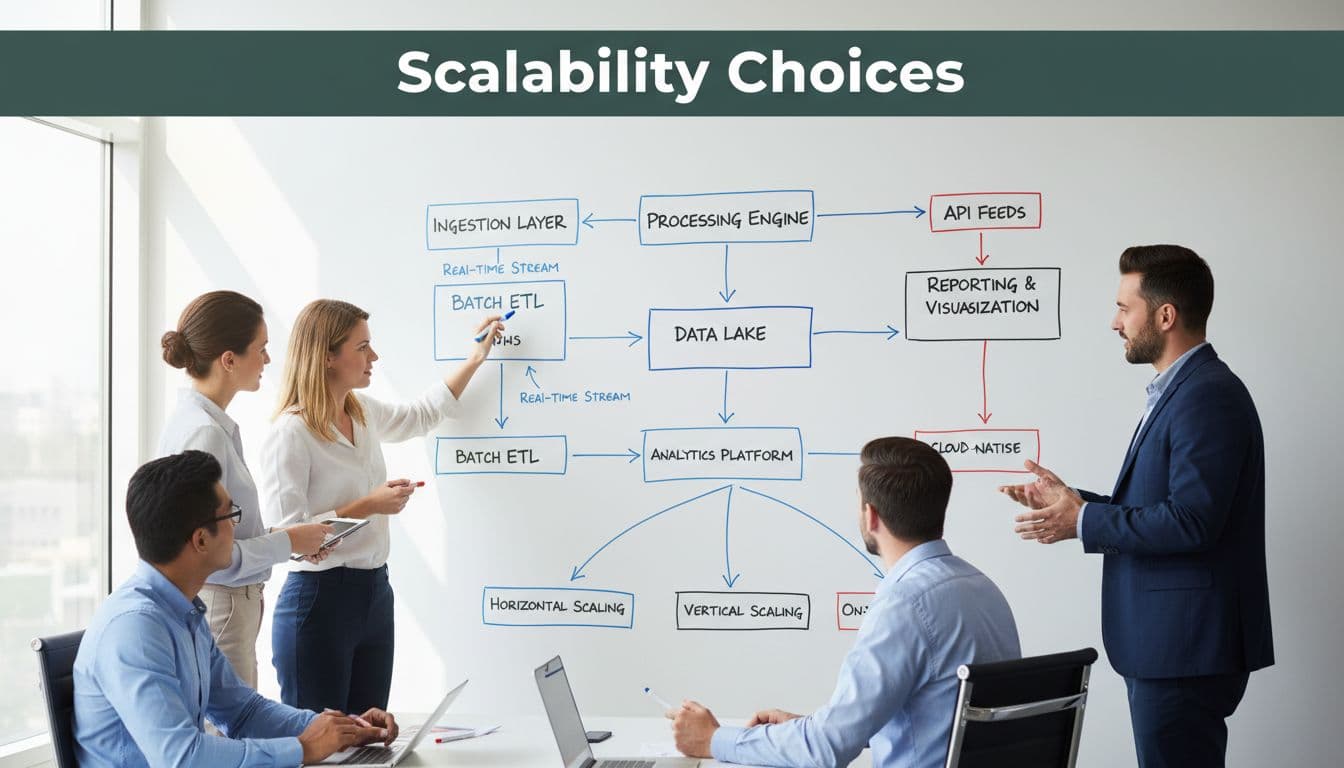
Long-term scalability is where teams sometimes overbuy. Many mid-sized firms assume they need the most technical platform on day one. Often they don’t. Fabric scales far enough for a large share of reporting, lakehouse, and governed analytics work. Databricks becomes the clearer choice when engineering complexity grows faster than business reporting.
Final recommendation for mid-sized teams in 2026
- Choose Fabric if your team is small to mid-sized, Power BI is central, and you need quick adoption with predictable spend.
- Choose Databricks if you already have strong engineers, expect complex pipelines or ML, and can manage usage-based cost.
- Use both only when your business and engineering needs are clearly split, and your team can support two operating models.
The opening choice usually comes down to team maturity, not ambition. A lean analytics team can get more value from Fabric sooner, while a more technical team can turn Databricks into a stronger long-term platform.
After licensing, governance, and staffing are on the table, the answer gets clearer. For many mid-sized Microsoft shops, Fabric is the safer first platform because it shortens the path to trusted reporting.
Databricks is the better bet when advanced engineering and AI are already part of the plan, not a distant idea. The right platform is the one your team can run with confidence six months from now. For a comparison with Snowflake, see our Microsoft Fabric vs Snowflake guide.
